
Nutrition • 2/6/2026
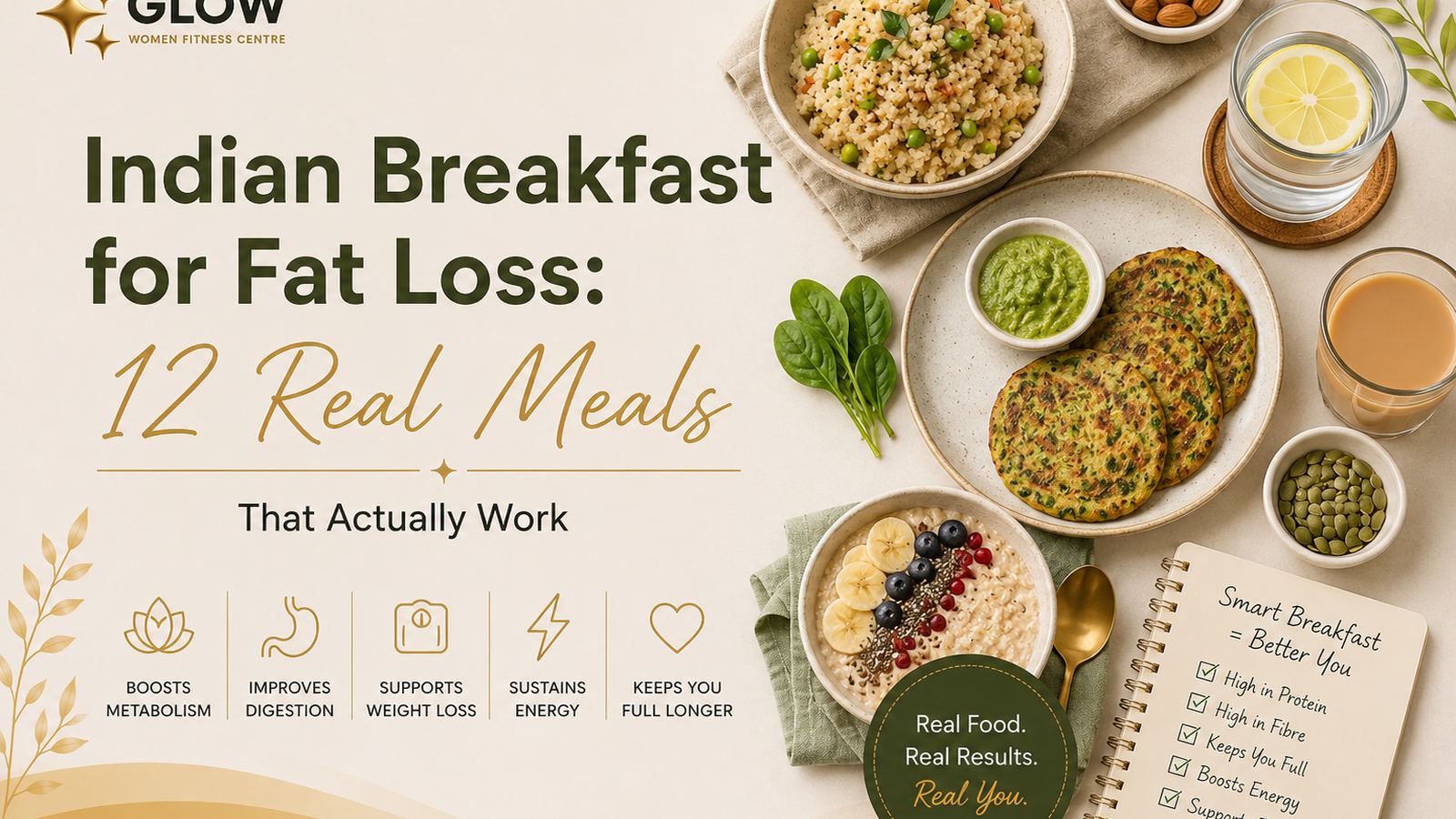
Indian Breakfast for Fat Loss: 12 Real Meals That Actually Work
The standard Indian breakfast (chai + biscuits, or 2 dosas + sambar) is roughly 8 g of protein and 60 g of refined carbs — the opposite of what your fat-loss week needs. Here are 12 real breakfasts that hit 25 g protein and keep you full to lunch.
The single highest-leverage meal to fix for fat loss in Indian women is breakfast. Not because breakfast is “the most important meal” — that’s overstated. Because the standard Indian breakfast is uniquely engineered to wreck your hunger and energy by 11 AM.
The fix isn’t skipping breakfast. The fix is breakfasts that actually hit 20–30 g of protein without being weird or expensive. Here are 12.
What’s wrong with most Indian breakfasts
Run the numbers on common Indian breakfasts:
| Breakfast | Protein | Carbs | What happens by 11 AM |
|---|---|---|---|
| Chai + 2 biscuits | 2 g | 25 g | Hungry, low energy, sweet craving |
| 2 dosas + sambar + chutney | 8 g | 65 g | Hungry, sluggish |
| 3 idlis + sambar | 9 g | 55 g | Hungry mid-morning |
| Poha (1 plate) | 5 g | 50 g | Crash by 10:30 |
| Aloo paratha (1) + curd | 8 g | 45 g | Heavy, then hungry |
| Bread + jam | 4 g | 40 g | Crash by 10:30 |
| Cornflakes + milk | 8 g | 50 g | Hungry by 11 |
| Upma | 6 g | 55 g | Crash |
The pattern: 6–9 g of protein, 40–65 g of refined carbs. The body’s response is a fast insulin spike, a faster glucose drop, and craving fast carbs again by mid-morning.
The fix: get breakfast to 20–30 g of protein with moderate (not excess) carbs. Below are real Indian breakfasts that hit this.
12 breakfasts that work
Each delivers ~25 g protein. Most are familiar — just with the protein bumped up to where it should be.
1. Eggs + curd + chapati
- 2 whole eggs (12 g) — bhurji, omelette, or boiled
- 1 cup curd (8 g)
- 1 medium chapati (3 g)
- Side of cucumber + tomato
- Total: 23 g protein
The simplest. Most kitchens already have everything.
2. Moong dal cheela + curd
- 2 moong dal cheelas (16 g) — made with sprouted moong batter, vegetables stuffed in
- 1 cup curd (8 g)
- Chutney
- Total: 24 g protein
Vegetarian, traditional, high protein. Cheela batter freezes — make a batch on weekends.
3. Paneer paratha + curd
- 1 paneer paratha (with 80 g paneer = 18 g)
- 1 cup curd (8 g)
- Total: 26 g protein
Filling, traditional, kids will eat it too. Watch the ghee — 1 tsp, not 4.
4. Greek-style hung curd + fruit + nuts
- 1 cup hung curd / Greek yogurt (18 g)
- 1 banana
- 30 g almonds or walnuts (6 g)
- 1 tbsp seeds (chia or pumpkin)
- Total: 26 g protein
Fast, no cooking. Make the hung curd by straining regular curd overnight through a muslin cloth.
5. Eggs + idli or dosa
- 3 idlis OR 1 dosa
- 2 boiled eggs (12 g)
- 1 cup sambar with extra dal (10 g)
- Total: 22+ g protein
The South Indian classic upgraded. Just adding eggs to the existing routine.
6. Sprouted moong + paneer scramble
- 1 cup sprouted moong (7 g)
- 50 g paneer scrambled with onion, tomato, masala (9 g)
- 1 small chapati (3 g)
- 1 cup curd (8 g)
- Total: 27 g protein
Looks like more cooking than it is — 10 minutes total.
7. Besan cheela + curd
- 2 besan cheelas (16 g)
- 1 cup curd (8 g)
- Mint chutney
- Total: 24 g protein
Besan (chickpea flour) is one of the highest-protein flours. Add finely chopped onion, tomato, coriander to the batter.
8. Oats with milk + nuts + egg on the side
- 40 g oats (4 g) + 1 cup milk (8 g)
- 1 tbsp peanut butter (4 g)
- 1 boiled egg (6 g)
- Cinnamon + a few raisins
- Total: 22 g protein
For oats-loving households. The egg on the side closes the protein gap.
9. Tofu bhurji + chapati + curd
- 100 g tofu scrambled with onion, masala (12 g)
- 1 chapati (3 g)
- 1 cup curd (8 g)
- Total: 23 g protein
For vegans or anyone wanting paneer’s protein with less saturated fat.
10. Smoothie — protein + carb + healthy fat
- 1 cup milk (8 g) OR 1 cup curd
- 1 scoop whey or plant protein (20 g)
- 1 banana
- 1 tbsp peanut butter
- Cinnamon, ice
- Total: 28+ g protein
For mornings when you genuinely can’t sit down for breakfast — drink and go. 90 seconds in a blender.
11. Chicken or fish + chapati + curd (non-veg comfort)
- 100 g grilled chicken or fish (22–25 g)
- 1 chapati (3 g)
- 1 cup curd (8 g)
- Salad
- Total: 33+ g protein
For Sundays or batch-cooked weekday leftovers. Heavy for some, perfect for others.
12. Upma — upgraded
- Standard upma (semolina, vegetables, mustard, curry leaves)
- Add: 50 g paneer crumbled in (9 g)
- Add: 1 boiled egg on the side (6 g)
- 1 cup curd
- Total: 23 g protein
The traditional upma at 6 g protein becomes a real meal at 23 g.
Common mistakes
1. “I don’t have time to cook in the morning.” Real, but breakfast can be 90 seconds (smoothie) or pre-prepped (cheela batter, boiled eggs in the fridge for the week, hung curd in a jar). It’s a planning problem, not a time problem.
2. “Curd alone is enough protein.” Regular curd is 8 g per cup. Cup of hung curd is 18 g. Most “I had curd” breakfasts aren’t actually hitting 25 g protein on their own.
3. “I’m not hungry in the morning.” That’s often a sign of disrupted appetite cues from previous protein-poor breakfasts. Two weeks of high-protein breakfast tends to reset morning hunger to normal.
4. “I want fewer calories — skipping breakfast helps.” For some women, intermittent fasting works. For most, skipping breakfast leads to a 4 PM crash and either over-eating at lunch/dinner or sugar-binging mid-afternoon. Net calories often higher, not lower.
5. “I’ll just have a protein bar.” Most commercial Indian “protein bars” are 8–12 g of protein with 20+ g of sugar — closer to a candy bar than breakfast. Read labels carefully if you go this route.
What to drink alongside
- Water first (300–500 ml on waking)
- Chai or coffee — but not with the meal. Move tea/coffee 30–60 min away from meals to preserve iron absorption (see iron deficiency for why)
- Skip juice. Even fresh juice spikes blood sugar faster than the fruit it was made from
- Skip sweetened “health drinks” (most are 80%+ sugar with marketing protein numbers)
How to make this stick
The single most useful habit: prep breakfast batches on the weekend.
- Cheela batter for 2–3 days
- 6 hard-boiled eggs in the fridge
- 200 g paneer pre-cubed
- 250 g hung curd in a jar
- Cut fruit / cucumber ready in containers
15 minutes of Sunday prep saves the weekday breakfast decision entirely.
Breakfast for specific situations
For PCOS — protein-first breakfast is the highest-leverage food change. Combine with our PCOS approach.
For pregnancy — slightly more calories total. Eggs are particularly valuable for choline (baby brain development).
For breastfeeding — calories up by 400–500/day total. Don’t cut breakfast — add to it.
For perimenopause — protein need rises. Anchor 25–30 g at breakfast non-negotiable.
For weight loss specifically — high protein breakfast is the single most evidence-based behavioural change for sustained fat loss. Skipping breakfast doesn’t reliably help.
What we recommend at Glow
Our Online Everyday Glow onboarding includes Indian-context macro guidance from day one. Most coaches send a starter breakfast list like this one to new members.
For your specific calorie + macro target, use the calorie calculator.
The short version
- The standard Indian breakfast is 5–9 g of protein. Real target: 20–30 g.
- 12 real Indian breakfasts above — most take 10 minutes; some take 90 seconds.
- Weekend prep makes the weekday decision automatic.
- Skip the “I’ll just have chai” days — they cost more later in cravings + 11 AM crash.
- Higher-protein breakfast is the most evidence-based behavioural change for sustained fat loss.
Train with us — protein-first nutrition built in → · Find your macros →