
Nutrition • 30/5/2026
Iron Deficiency in Indian Women: Why You're Tired, and What Actually Fixes It
Half of Indian women are iron-deficient. The fatigue, the brain fog, the breathlessness — often dismissed as 'just tired' — frequently come down to ferritin. Symptoms, the labs to ask for, the right foods, and why supplements need a doctor's input.
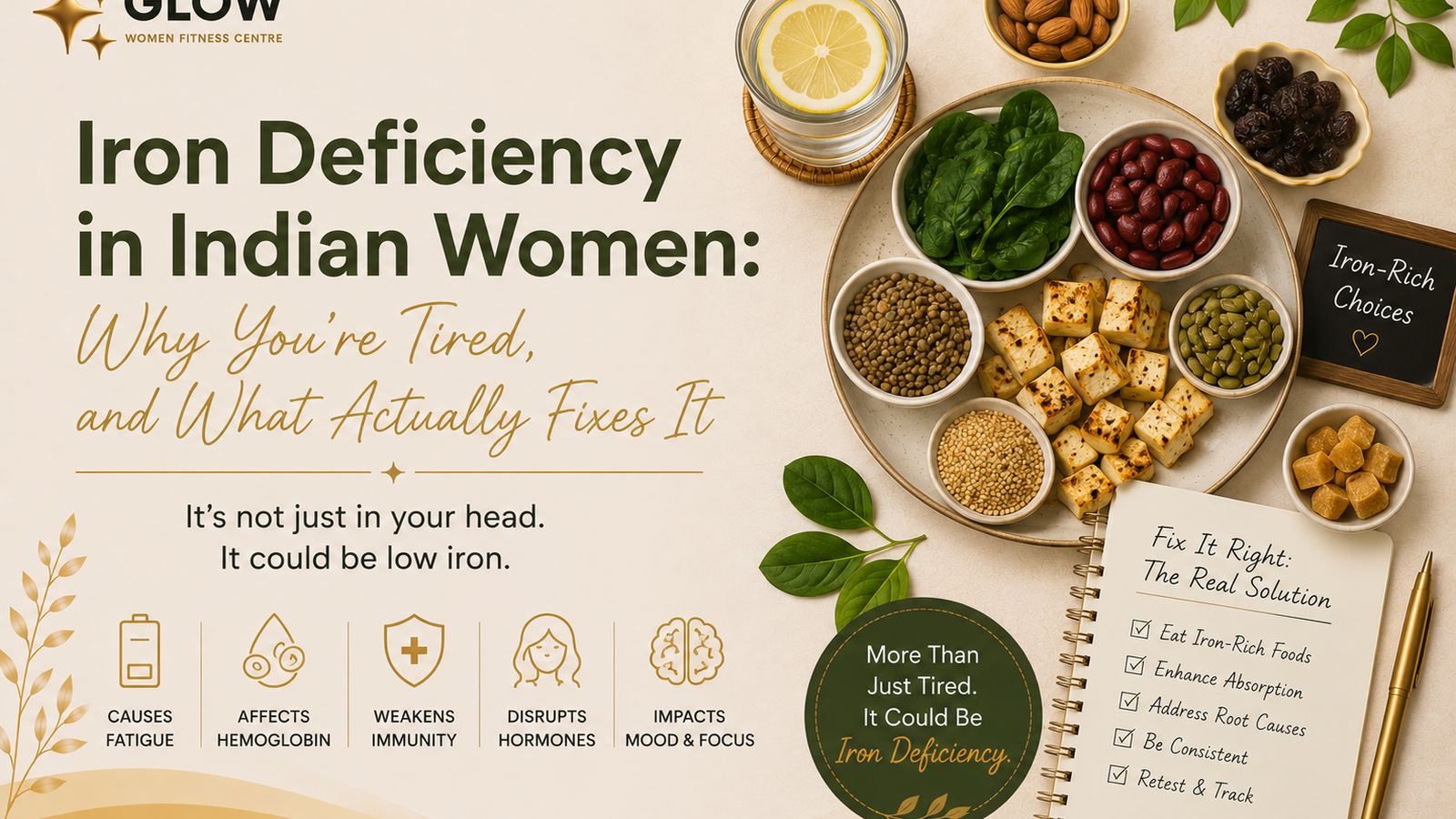
The single most common — and most under-diagnosed — nutritional issue in Indian women is iron deficiency. Roughly half of all Indian women of reproductive age are anaemic, and many more are iron-deficient without being technically anaemic yet.
The downstream effects — fatigue, brain fog, breathlessness, poor exercise tolerance, hair loss, low mood — are routinely dismissed as “just tired” or “you have a busy life”. Often, the real fix is in your ferritin number.
Here’s the honest version.
Two related but different conditions
This is the part most women don’t realise:
1. Iron deficiency — your iron stores (ferritin) are low. Symptoms can be significant even when your haemoglobin is still “normal”.
2. Iron-deficiency anaemia — iron stores are so depleted that your body can’t make enough haemoglobin. Now your haemoglobin is also low.
You can be iron-deficient for months or years before becoming anaemic. The fatigue and brain fog usually start in the iron-deficient phase — long before a basic blood test would flag a problem.
This is why so many women are told their haemoglobin is “fine” but still feel exhausted. The right test is ferritin (iron stores), not just haemoglobin.
Why Indian women are at higher risk
Five factors compound:
1. Plant-based diets are common. Iron from plant sources (non-haem iron) is absorbed at 2–10% vs. animal sources (haem iron) at 15–35%. Vegetarian women have to eat much more iron-rich food to get the same absorbed amount.
2. High tea/coffee consumption with meals. Tannins in tea and coffee block iron absorption by up to 80% when consumed within 30–60 minutes of meals. The “chai with breakfast” cultural pattern actively reduces iron uptake.
3. Menstrual blood loss. A normal period loses 30–60 ml of blood; heavy periods lose 80+ ml. Each ml is iron lost. Heavy periods + low intake = chronic deficit.
4. Pregnancy and breastfeeding — these double iron needs. Many women never recover their iron stores between pregnancies.
5. Low awareness. The cultural pattern of “just being tired” normalises what’s actually a treatable medical condition.
The symptoms (most women miss these for years)
The classic textbook signs of anaemia (pale skin, severe fatigue, breathlessness) often only show up once anaemia is well-established. The earlier signs of iron deficiency are more subtle and more common:
Energy and brain:
- Persistent fatigue that doesn’t lift with rest
- Brain fog, poor concentration
- Slower thinking, harder to make decisions
- Daytime sleepiness even after 8 hours
Physical:
- Breathlessness walking up a flight of stairs
- Cold hands and feet
- Frequent headaches
- Hair shedding more than usual (handfuls in the shower)
- Brittle nails, vertical ridges
- Pale lower eyelid (pull the lower lid down — should be pink-red, not pale)
- Pica (craving for ice, clay, raw rice, paper — bizarre but a real iron-deficiency sign)
Exercise-specific:
- Workouts that used to be easy now feel exhausting
- Heart rate higher than expected for the effort
- Recovery between sessions takes longer
- Strength gains stall despite consistent training
Mood:
- Anxiety or low mood that doesn’t match circumstances
- Increased PMS severity
- Reduced libido
If you tick 3+ of these, get ferritin tested. It’s a cheap, common test most labs offer.
The right labs
Don’t accept just “haemoglobin is normal”. Ask for:
- Haemoglobin (Hb) — the standard, but a late marker
- Ferritin — iron stores, the most useful early marker
- Serum iron
- Total iron-binding capacity (TIBC)
- Transferrin saturation (%)
The full iron panel plus haemoglobin tells the actual story.
Normal-range ferritin in standard reports is often 11–300 ng/mL. Many international guidelines (and increasingly Indian endocrinologists) consider anything below 30 ng/mL functionally deficient — even if “in range” on the lab report.
If you’re symptomatic and ferritin is under 30, treat it as deficiency. Don’t accept “in range” if you’re feeling tired.
How much iron you need
Daily recommendations (Indian women):
- Adult women (non-pregnant, menstruating): 21 mg/day
- Pregnant women: 27 mg/day
- Breastfeeding women: 21 mg/day
- Post-menopausal women: 9 mg/day (much lower without menstrual loss)
Most Indian women get 8–14 mg/day. The gap is real.
The foods that actually move ferritin
Highest-iron Indian foods (per typical serving)
Animal sources (haem iron — well-absorbed):
- Mutton (100 g, lean) — 3 mg
- Eggs (2 whole) — 2 mg
- Chicken liver (50 g) — 6 mg
- Fish (100 g, varies) — 1–2 mg
Plant sources (non-haem iron — less absorbed):
- Cooked palak/spinach (1 cup) — 6 mg
- Methi (1 cup cooked) — 4 mg
- Beetroot (1 medium) — 1 mg
- Cooked rajma (1 cup) — 4 mg
- Cooked black chana (1 cup) — 5 mg
- Whole moong dal (1 cup cooked) — 4 mg
- Tofu (100 g) — 5 mg
- Pumpkin seeds (30 g) — 4 mg
- Cashews (30 g) — 2 mg
- Jaggery (1 tbsp) — 1 mg
- Dried apricots (50 g) — 2 mg
Two food-pairing tricks that double absorption
1. Vitamin C alongside iron-rich foods doubles absorption.
- Lemon over dal
- Amla powder added to dishes
- Orange / citrus before or after the meal
- Tomato in the curry
- Raw onion + lemon as a side
2. Avoid tannins (tea, coffee) for 1 hour around iron-rich meals.
- Move your chai to mid-morning, not with breakfast
- Move post-lunch coffee 90 minutes after the meal
- Use lemon water with meals instead
These two changes alone often improve ferritin within 3 months for mildly deficient women.
Other absorption blockers to know
- Calcium with iron (a glass of milk with dinner) reduces iron absorption — separate by 1–2 hours
- Whole grains and legumes contain phytates that block iron — soaking, sprouting, and fermenting (which traditional Indian cooking already does) reduces this significantly
When food alone isn’t enough — supplementation
If your ferritin is under 30 ng/mL and food changes haven’t moved the number in 3 months, supplementation is likely needed. But not casually — get a doctor’s input first.
Why a doctor matters:
- Iron supplements interact with several medications
- Iron supplements should be paired with vitamin C
- The dose depends on your specific deficit
- Iron overdose is genuinely dangerous (especially with kids in the house — leading cause of accidental poisoning in toddlers)
- Some women need IV iron (not pills) — your doctor will know
Typical regimens:
- Ferrous fumarate or ferrous sulphate: 60–120 mg elemental iron daily
- Bisglycinate (gentler on the stomach): 25–50 mg twice a day
- Take on an empty stomach with vitamin C (orange juice or 500 mg supplement) for best absorption
- Take away from milk, tea, coffee, and calcium supplements
- Recheck ferritin at 3 months — adjust based on response
Common side effects: constipation, dark stools (harmless), occasional nausea. Bisglycinate form has fewer side effects.
Avoid: random “general multivitamins with iron” if you’re significantly deficient — the iron dose is usually too low to matter, and you may need a more focused approach.
When to escalate
See a doctor urgently if:
- Severe fatigue + breathlessness + chest pain
- Heart racing at rest
- Fainting episodes
- Severe symptoms unchanged after 3 months of supplementation (might need IV iron)
- Heavy periods causing the deficiency (treat the underlying menorrhagia)
If you’re trying to conceive or are pregnant, iron status matters even more — get tested before pregnancy starts ideally.
Iron and exercise
For active women, iron deficiency tanks performance dramatically:
- VO2 max drops
- Lactate threshold lowers
- Recovery is slower
- Strength gains stall
- Risk of injury rises
Athletes with low ferritin (under 35–40) often see major performance gains within 2–3 months of restoring iron status. If your training has plateaued or felt unusually hard recently, ferritin is worth checking.
For specific situations
Vegetarian women
Higher risk by default. Lean on the plant sources above + vitamin C pairing + consider the higher-iron preparations (sprouted, fermented foods). Many vegetarian women benefit from a maintenance supplement (with doctor input).
Pregnant women
Iron needs nearly double. Most OBs prescribe iron + folic acid throughout — take it. If you’re severely deficient pre-pregnancy, treat before conceiving if possible.
Breastfeeding women
Continue iron-rich foods + supplementation if recommended. Your body is rebuilding what pregnancy depleted while also producing iron-rich milk.
Postmenopausal women
Iron needs drop (no more menstrual loss). Stop iron supplements unless specifically prescribed — postmenopausal women are actually at risk of excess iron, which causes its own problems.
Heavy periods
Address the heavy periods themselves (gynaecologist visit — there are several effective treatments) alongside iron repletion. Just supplementing without treating the cause is a losing battle.
What we recommend at Glow
For all our members, especially those starting Online Everyday Glow and feeling unusually fatigued, we suggest a basic ferritin check at the start. It’s one of the highest-leverage things to rule out before assuming you “just don’t have the discipline” for training.
For PCOS women — iron deficiency overlaps with PCOS symptoms (fatigue, brain fog). Don’t conflate them. See our PCOS Self-Assessment for the PCOS side.
The short version
- ~50% of Indian women are iron-deficient. Symptoms are often dismissed as “just tired”.
- The right test is ferritin — not just haemoglobin. Aim for above 30 ng/mL (better: 40–50).
- Symptoms beyond fatigue: brain fog, breathlessness, hair shedding, brittle nails, pica (ice cravings).
- Food levers: iron-rich foods + vitamin C pairing + avoid tea/coffee within 1 hour of meals.
- If ferritin is low and food changes don’t fix it in 3 months — supplement, with doctor input.
- Pregnancy, breastfeeding, vegetarianism, and heavy periods all raise risk significantly.
Train with us — energy and recovery improve when iron does →