Workouts • 27/5/2026
Walking for Women: Why 7,000 Steps Is the New 10,000
10,000 steps came from a 1960s pedometer ad — not science. The actual research says 7,000 steps captures most of the health benefit. What walking does for women specifically, when to walk, and the post-meal walk most plans miss.
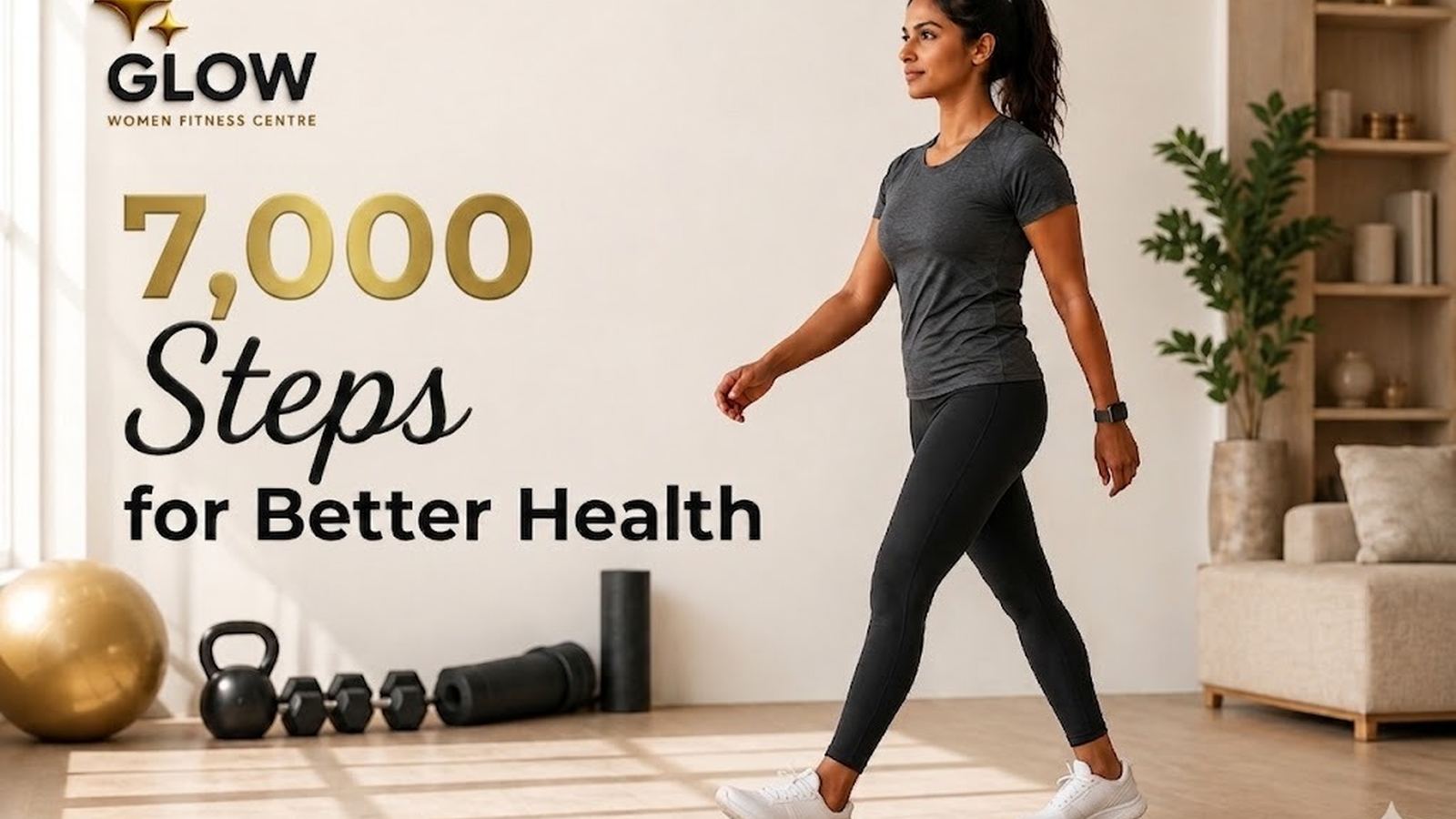
The 10,000-steps-a-day rule has been quoted for decades as if it came from a randomised controlled trial. It didn’t. It came from a 1965 Japanese marketing campaign — a pedometer brand called Manpo-kei (literally “10,000-step meter”) rolled out around the Tokyo Olympics. The number was round, memorable, and worked beautifully for selling pedometers. The science came later, mostly trying to validate the marketing.
What the actual research says today: most of the health benefit happens by 7,000 steps a day, and the steps don’t have to all be brisk. For women, this changes things.
What the research actually shows
The data we have now (from large studies tracking step counts with health outcomes):
- 2,000 → 4,000 steps/day: significant reduction in all-cause mortality risk
- 4,000 → 7,000 steps/day: dramatic further reduction (about 50% lower mortality risk vs. sedentary)
- 7,000 → 10,000 steps/day: smaller incremental benefit — still real, but the curve flattens
- Beyond 10,000: minimal additional mortality benefit; benefits saturate
The 2023 JAMA Neurology study and the 2022 Lancet Public Health meta-analysis (47,000 adults) both landed in this band — 6,000 to 8,000 steps a day captures most of the available health benefit for adults, with diminishing returns beyond.
For older adults (60+), the number is even lower — about 6,000 steps a day seems to be the inflection point.
Why this matters for women
Most fitness advice that says “10,000 steps a day” was calibrated for men in initial studies. The female body responds slightly differently — and importantly, women under chronic stress (most working women, most moms) don’t need more total movement; they need the right movement.
The 7,000-step target hits the health-benefit sweet spot without pushing into the over-training/cortisol-spiking zone that hours of daily cardio can cause for already-stressed women.
You can absolutely walk more if you enjoy it. But the guilt over not hitting 10,000 is misplaced.
The post-meal walk — the underrated tool
If we could pick one walking habit for an Indian woman to adopt, it would not be 10,000 daily steps. It would be a 15–30 minute walk within an hour after meals — particularly after lunch and dinner.
The mechanism is precise: walking after eating engages your muscles to pull glucose out of your blood, blunting the post-meal blood-sugar spike by 30–40%. Over months, this single habit:
- Improves insulin sensitivity meaningfully (huge for PCOS, pre-diabetes, anyone with insulin resistance)
- Reduces belly fat storage (visceral fat is most responsive to insulin)
- Smooths post-meal energy crashes
- Improves digestion (the gentle movement helps gut motility)
Two 20-minute walks after lunch and dinner do more for metabolic health than one 40-minute walk first thing in the morning.
What walking does specifically for women
Beyond the general health benefits:
For PCOS — post-meal walks are one of the highest-leverage interventions, alongside strength training. Insulin sensitivity is the central PCOS problem; walking is a direct intervention.
For pregnancy — the safest, easiest movement throughout. Reduces gestational diabetes risk, eases back pain, supports better birth outcomes.
For postpartum — typically the first movement allowed (from week 1 in most cases). Restores cardiovascular fitness gently, eases mood through sunlight + movement combination.
For perimenopause and menopause — supports bone density (impact loading), cardiovascular health (declining oestrogen reduces cardiovascular protection), and mood (sunlight + walking is one of the most studied non-medical mood interventions).
For women with anxiety / depression — 20-minute walks outdoors are reliably mood-improving. Combined with sunlight, often more effective than indoor cardio for mental health.
Should you walk brisk or slow?
Both have benefits, but they’re different.
Slow walking (talking pace) — easy on joints, low cortisol cost, good for daily volume, useful for digestion and stress management. Most of your steps should be this.
Brisk walking (slightly breathless, can speak short sentences) — adds cardiovascular benefit, contributes to fat loss, raises VO2 max. 20–30 minutes of brisk walking 3–4 days a week is plenty.
Power walking / hill walking — closer to a workout. Counts as cardio for your weekly training plan.
You don’t need to walk fast all the time. Most days, slow-to-moderate is exactly right.
Do you need a step counter?
It helps for awareness, but it’s not essential.
If you have a smartphone, the built-in step counter (Apple Health, Google Fit, Samsung Health) is accurate enough — you don’t need a separate device.
If you don’t track steps at all, the rule of thumb that works for most women:
- A 30-minute walk = roughly 3,000–3,500 steps
- General daily activity (errands, work, kitchen, household) = 2,000–4,000 steps for most working women
- Add a dedicated 40-minute walk most days → 7,000+ steps total
If you’re sedentary at a desk job and only get to 2,000–3,000 steps without a deliberate walk, the deliberate walk is the high-leverage move.
A realistic walking plan
For a woman starting from sedentary:
Week 1–2: Build the habit, not the distance
- 15 minutes after dinner, daily
- That’s it. No tracking, no pushing distance.
Week 3–4: Add a morning walk
- 15 min morning + 15 min after dinner = 30 min/day total
- Optional: track steps to see where you are
Week 5–8: Reach the threshold
- 20–30 min morning + 15–20 min after dinner
- Aim for 7,000+ steps total most days
- One longer walk on the weekend (45–60 min) for the cardio bonus
Week 9+: Sustain
- This is now your baseline. The body has adapted; it’ll ask for it.
- Add a brisk-pace day or hill day for extra cardio benefit if you want more
For most women, 40–60 minutes of dedicated walking + normal daily activity = 7,000–10,000 steps without trying very hard.
What about treadmill / mall walking?
All good. Indoor walking counts. But there’s a real “green exercise” effect — walking outdoors in nature, even an urban park, has measurably larger mood benefits than the same time on a treadmill. If you can choose, choose outdoors.
For Indian women dealing with weather extremes (summer heat, monsoon, winter smog in cities), having a treadmill or mall option for backup days is genuinely useful — keeps consistency intact.
Walking is not enough for fat loss on its own
The honest part: walking alone, without strength training and without attention to food, won’t dramatically reshape your body. It will:
- Improve cardiovascular health
- Lower blood pressure
- Improve insulin sensitivity
- Help mood and sleep
- Help maintain weight
But for visible body composition change — losing fat, building muscle, looking and feeling stronger — walking needs to be paired with strength training 3×/week and protein-led eating. The combination is powerful. Walking alone is one piece of a bigger picture.
What we recommend at Glow
For our Online Everyday Glow members, the standing daily prescription is:
- Three live training sessions a week (strength, cardio, yoga rotation)
- Daily walks — 30+ minutes, ideally split between morning and post-meal
- One longer walk (45–60 min) on a weekend or rest day
This combination — structured training + walking volume + post-meal walks specifically — produces sustained results in a way either alone doesn’t.
The short version
- 10,000 steps came from a 1965 pedometer marketing campaign, not science.
- Actual research: 7,000 steps captures most of the health benefit; benefits flatten beyond.
- The single highest-leverage walking habit is a 15–30 minute walk within an hour after meals — especially after dinner.
- Slow walking is fine for most steps. Add brisk-pace 3–4×/week for cardiovascular bonus.
- For fat loss, walking needs to be combined with strength training and protein-led eating.
- For PCOS, post-meal walks are one of the highest-leverage interventions.